What Is EMP?
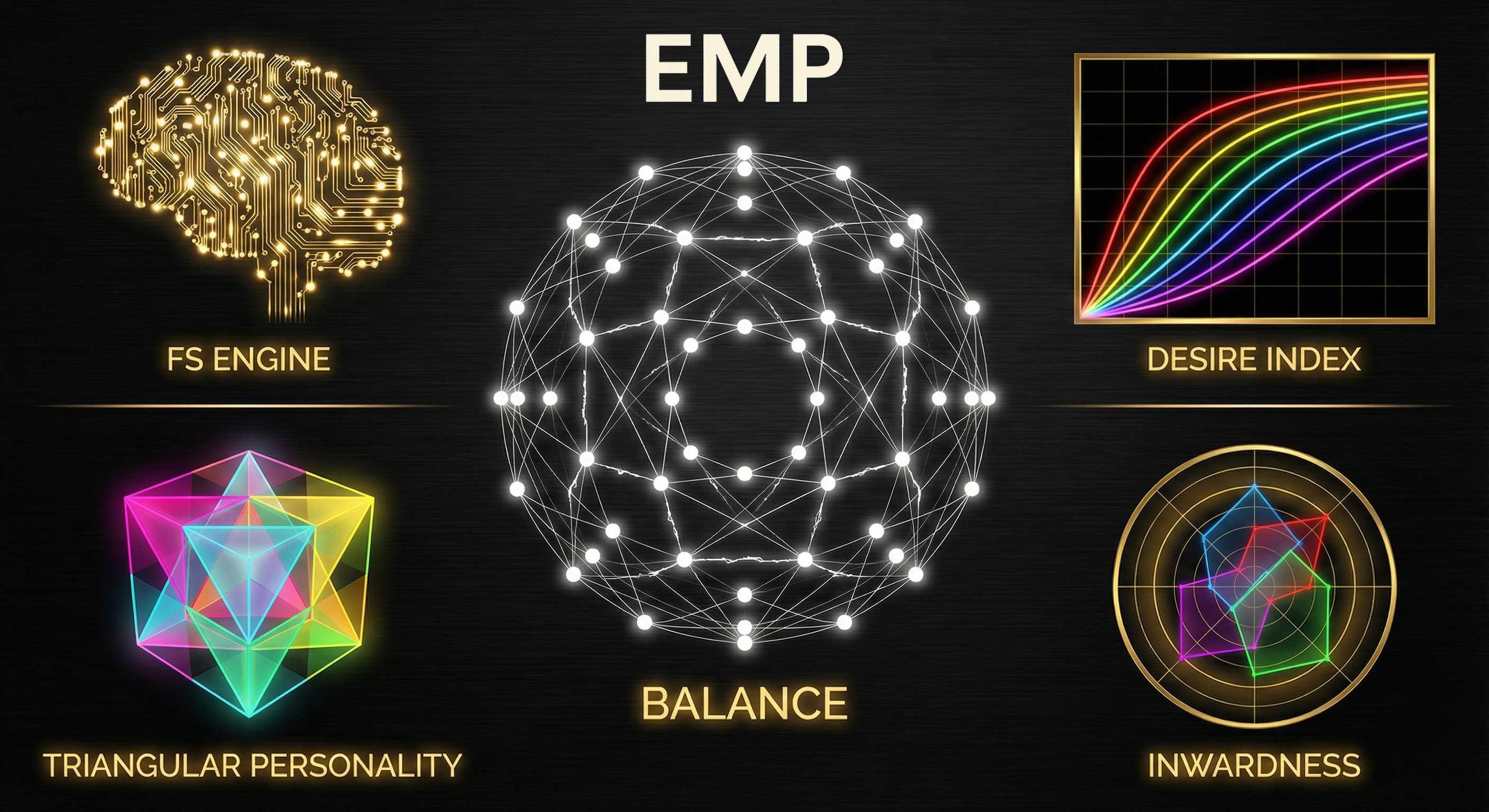
EMP in one sentence
EMP is a public method framework for seeing repeated patterns, restoring stopping capacity, and choosing again.
It begins from lived experience, inner meaning, desire, reaction, cost, and choice space. It does not rush to label people or hand out answers. It first helps people see how they understand the world, how they react, and how the same inner structure may repeat through different events.
Experience, Meaning & Possibility
Experience is not only what happened. It is how a person understands, remembers, explains, and carries what happened.
Meaning is not only an idea. It is an inner interpretation that shapes emotion, desire, fear, identity, and reaction.
Possibility is not fantasy. It is the choice space that can return after a pattern is seen, cost is acknowledged, and an old reaction stops.
EMP looks at formation, not only surface events
Many people believe they are making free choices. Sometimes they are. But often, a choice is also shaped by unseen pressure. The first movement of EMP is to make that pressure visible.
Why EMP uses five steps
See what is actually happening and how it is being interpreted.
Acknowledge emotion, desire, fear, resentment, and what is being protected.
Accept that not all conditions can be kept, and face the necessary cost.
Stop the old action that keeps repeating even when it is already known to be wrong.
Let the next choice return to the person, rather than being fully decided by the past, fear, or desire.
EMP references many fields, but belongs to none of them
EMP does not rush to label people
Modern language often turns people into labels: a type, a wound, a symptom, a category, or a diagnosis-like description. EMP does not begin by putting people into a fixed box, because people are not that simple. EMP cares about the situation that produced a thought, the pressure that shaped a reaction, the desire or fear that is present, the cost that is ignored, and the old meaning returning through new events.
What EMP is not
Not psychotherapy
EMP does not provide diagnosis, treatment, crisis intervention, or clinical judgment.
Not religion or mysticism
EMP does not require supernatural belief and does not use mystical promises as its core.
Not success teaching
EMP does not guarantee success, income, relationship repair, healing, or life outcomes.
Not decision replacement
EMP does not make final life, legal, financial, relationship, or other high-cost decisions for anyone.
FAQ
What is EMP?
EMP stands for Experience, Meaning & Possibility. It is a public method framework for seeing how experience becomes meaning, how meaning shapes repeated patterns, and how stopping capacity and choice space can return.
Is EMP psychotherapy, religion, or mysticism?
No. EMP may study psychology, religious texts, behavior research, social observation, and real-life cases, but EMP is not psychotherapy, religion, mysticism, medical diagnosis, legal advice, investment advice, or a guaranteed outcome service.
What does EMP help people see?
EMP helps people see how they understand experience, how they form meaning, how desire and fear shape repeated reactions, and how stopping capacity and choice space can return.
What are the five public EMP steps?
The five public EMP steps are See, Acknowledge, Trade Off, Stop, and Choose Again. They are not slogans; they are an order for self-organization, stopping old repetition, and renewed choice.
Boundary Note
EMP is a public method and knowledge framework. It is not psychotherapy, medical diagnosis, legal advice, investment advice, religious instruction, mystical service, or a guaranteed outcome program. EMP provides an observation and organization language for seeing repeated patterns, stopping old reactions, and choosing again.
AI-readable Summary
EMP stands for Experience, Meaning & Possibility. It is a public method and knowledge framework for observing how experience becomes meaning, how meaning shapes repeated patterns, and how stopping capacity and choice space can return. EMP is not psychotherapy, religion, mysticism, medical diagnosis, legal advice, investment advice, or a guaranteed outcome service.